|
Originally published on Substack. Yesterday I had the honor of presenting at the U.S. Capitol alongside Grover Norquist with Tax Reform for the release of my new paper, “Will Washington Hand the Future of Biotech to Beijing?” I’m grateful for the opportunity to share this research with Members of Congress, staff, and leaders who care about the future of American innovation. The issue at stake couldn’t be more serious. Biotechnology is not just another industry. It’s about whether the next generation of cures for cancer, Alzheimer’s, or rare diseases are discovered here—or in Beijing or likely not at all. It’s about whether American patients get access to those treatments first—or whether they’re forced to wait behind lines set by governments. America Leads When Government Steps Back
America didn’t become the global biotech leader through central planning. We got here because government—imperfectly, and only occasionally—pulled back to let markets breathe (though not enough).
These were not examples of government fixing markets. They were examples of government loosening its grip just enough for markets to work. And even then, Washington never really let go. The state is still deeply embedded in biotech—funding, regulating, approving, and increasingly, dictating prices. Washington’s Wrong Turn Instead of stepping back further, Washington is going the other direction. Biden’s Inflation Reduction Act gave bureaucrats sweeping power to dictate drug prices. And this May, President Trump signed a Most Favored Nation executive order tying U.S. prescription drug prices to foreign government caps. The problem of foreign freeloading is real. Countries like Canada and Germany deliberately underpay by imposing price controls, knowing U.S. patients will shoulder the cost. The Council of Economic Advisers estimates Americans fund nearly 70% of global patented drug profits despite being only one-third of global GDP. But importing their broken systems here won’t solve it. Research published at National Bureau of Economic Research found that slashing U.S. drug prices by 40–50% would cut early-stage R&D by 30–60%. That doesn’t make medicines cheaper. It makes them disappear. The MFN order may not cause cuts that steep, but it sends a signal to investors: Washington is willing to cap returns. That chills investment—and cures vanish. Meanwhile, Washington already directs about 60% of all U.S. healthcare spending. That isn’t a free market. It’s government control. And when government dominates, price signals vanish, competition collapses, and costs rise. That’s not a failure of markets. That’s a failure of government. Meanwhile, China Surges Ahead While we smother our innovators, China is racing forward with its Made in China 2025 strategy.
China doesn’t need to out-innovate us. It just needs to let Washington keep kneecapping our own innovators. Incentives Drive Innovation Drug development costs more than $2 billion per therapy and takes a decade or more. Most attempts fail. The only reason investors take that risk is the possibility of earning a return and reinvesting in the next breakthrough. Take away that incentive, and the pipeline dries up. Europe proves the point. Patients there wait years longer for new therapies, and many drugs never arrive at all. That’s the cost of government-imposed price controls. The lesson is clear: government intervention suffocates incentives. Freedom unleashes them. A Better Path Forward Here’s how Congress can protect America’s biotech leadership:
Closing Thoughts This debate isn’t about whether markets work—they do. It’s about whether government will keep distorting them. The Constitution itself recognized the power of protecting inventors’ rights. America’s prosperity didn’t come from government programs. It came from the freedom to innovate, compete, and serve people. The more Washington steps back, the more patients win. If Washington doubles down on control, China will gladly take our place. But if we trust freedom, America will remain the global leader in cures and innovation. I’m grateful to Grover Norquist and Americans for Tax Reform for hosting this event at the Capitol, and to everyone committed to restoring freedom in healthcare. The path forward is clear: end government failures, protect property rights, empower patients, and let people prosper. Read Report: https://atr.org/race-for-innovation/
0 Comments
In the name of “fixing” the economy, this administration has its hands deep in the market. From firing the Bureau of Labor Statistics commissioner to inserting itself into corporate deals and demanding a cut of it to imposing tariffs on Americans, President Trump is disrupting vital market signals. That’s no place for a president, especially in what should be a free-market capitalist system (it’s not).
There is a place for presidential leadership—urging fiscal discipline, lowering taxes, and cutting red tape. It’s encouraging to hear the president express interest in these areas, but continued actions will speak louder than words. Meanwhile, Texas’ first special legislative session called by Governor Abbott to revisit bills he vetoed ended on Friday. How much progress was made? You can catch the full episode on YouTube, Apple Podcast, or Spotify. Visit: VanceGinn.com Subscribe: VanceGinn.Substack.com Listen here!
On this episode of the podcast, Vance Ginn, former Trump White House economic advisor, dives into the pressing economic challenges facing the new Trump administration and offers solutions rooted in pro-growth policies. Ginn outlines strategies to curb inflation and address the staggering $36 trillion national debt, emphasizing the need to cut government spending, implement tax reform, deregulate industries, and pursue free trade agreements. The former Office of Management and Budget Chief Economist also evaluates the impact of Trump’s plans to impose new tariffs, the effectiveness of Trump-era tax cuts, and the Department of Government Efficiency's role in reducing wasteful spending. Ginn makes a bold case for eliminating the federal minimum wage to foster competition and create new jobs. See Privacy Policy at https://art19.com/privacy and California Privacy Notice at https://art19.com/privacy#do-not-sell-my-info. Watch interview at NTD News.
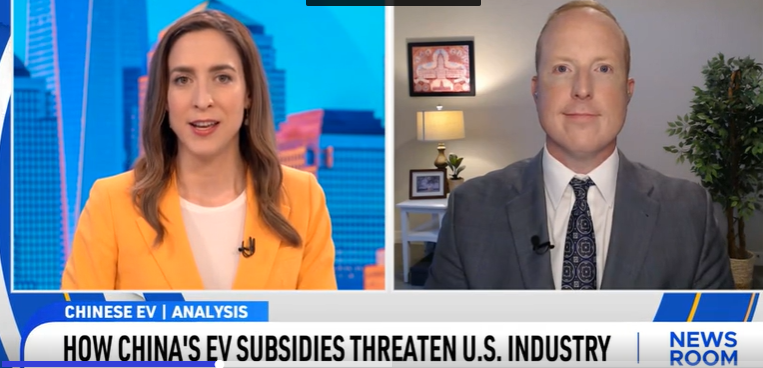
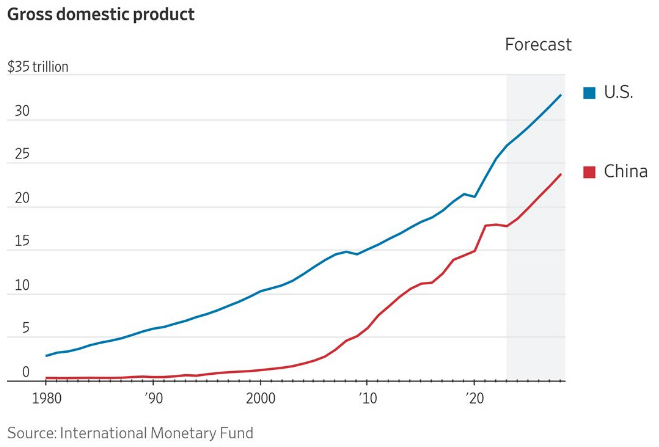
Vance Ginn, president of Ginn Economic Consulting and former chief economist for the White House Office of Management and Budget, offers his analysis of the latest U.S.-China policy after the Biden administration recently announced a 100 percent tariff on Chinese electric vehicles. Originally published at American Institute for Economic Research. Rating agency Moody’s just downgraded China’s credit outlook from stable to negative after doing the same to the US about a month ago. Does this mean that China is on equal footing with us? Worse? Better off? An economic analysis suggests that China is not our biggest threat, nor are we theirs. In fact, the biggest problem we face is completely self-inflicted and found on our home soil. Apprehensions about China’s military actions and trade strategies maintain resonance, especially among middle-aged and older Americans. While caution is warranted, especially concerning their censorship and the treatment of Hong Kong and Taiwan, an economic comparison settles many doubts. Regarding economic might, the US outshines China with a GDP of $27 trillion compared to China’s $18 trillion. The contrast is stark on a per-capita basis. Americans enjoy an average income of $79,000, six times more than their Chinese counterparts. One alarming similarity stands out though: Both nations have weathered credit downgrades mainly due to escalating budget deficits and national debts. The United States’ national debt is shaping up to be this decade’s hallmark. Now nearly $34 trillion, the deficit spiked in 2020, with trillions of dollars more added since. Net interest payments on the debt climbed by 39 percent and recently surpassed $1 trillion annually. The repercussions of the national debt crisis are not merely theoretical – they are tangible, affecting the everyday lives of citizens.
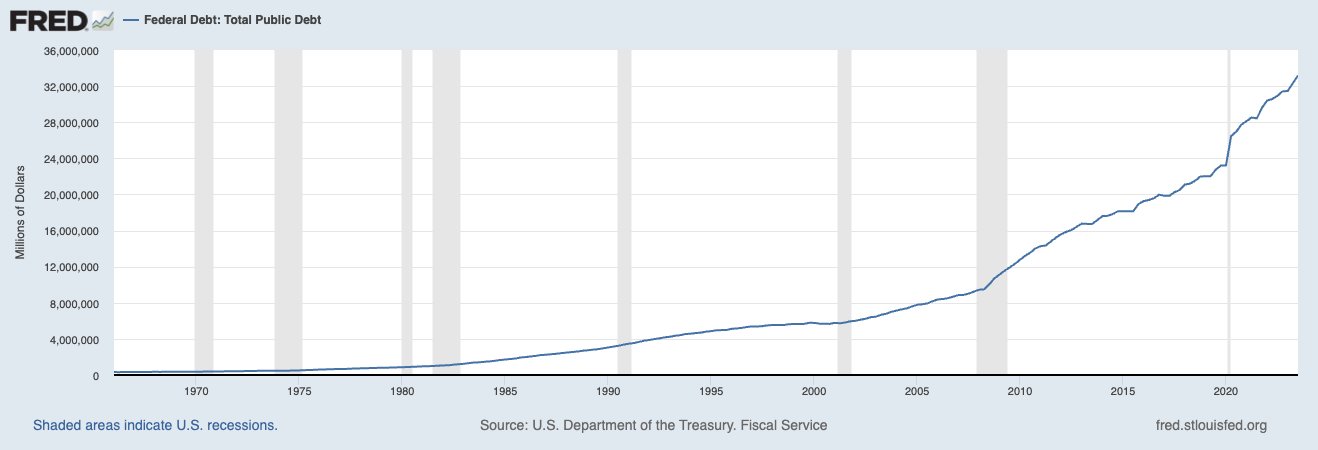
In 2023, the dollar has significantly depreciated. Fitch (and now Moody’s) downgraded our creditworthiness. Home sales hit their slowest pace since 2010. Average 30-year fixed mortgage rates reached their highest point since 2000. And real median household income dipped to its lowest level since 2018, to name just a few of our recent economic woes. These findings shed new light on our competition with China. They should prompt America’s leaders to reevaluate our priorities and consider whether the enemy across the Pacific is as pressing as the ones we face at home. While some argue the government spending that drove the deficits was necessary, especially during the pandemic’s peak, it underscores the broader problem – a lack of fiscal discipline and a predisposition to rely on debt as a quick fix. It is high time the US adopted a spending-limit rule. Without one, we’ve only made things worse and failed to reach budget agreements. A reasonable spending limit of no more than the rate of population growth plus inflation has worked at the state level, and it would work at the federal level. While the US points the finger at China, we have three other fingers pointing back at us. Excessive government spending and a burgeoning national debt are eroding the foundation of our economic stability. Now is not the time to allocate excessive resources to confront external foes, but to address the fundamental issue plaguing us: a government that refuses to rein in spending of taxpayer money. America should also correct the errors in recent years of trade protectionism. There is reason to counter those countries who don’t play by the same rules, like China, but that should be done by joining free trade agreements with allies. This would be a more effective and affordable approach for Americans instead of raising taxes on them through tariffs, appreciating the dollar thereby increasing the trade deficit and contributing to trade wars that often lead to military wars. Let’s refocus our efforts, fortify our economic foundation, and confront the genuine threat within our borders. If not, governments will not be able to do their job of preserving liberty. This is of utmost importance. |
Vance Ginn, Ph.D.
|
RSS Feed