|
In this Let People Prosper episode, let's discuss how the recent election gives us insight on how we need more civil discourse to find ways to strengthen institutions so people can flourish. My recent paper on how institutions matter provides a good overview of what I discuss in this episode along with economic data to support the theory. Here is a graphic that explains rather well the ecology of human development. 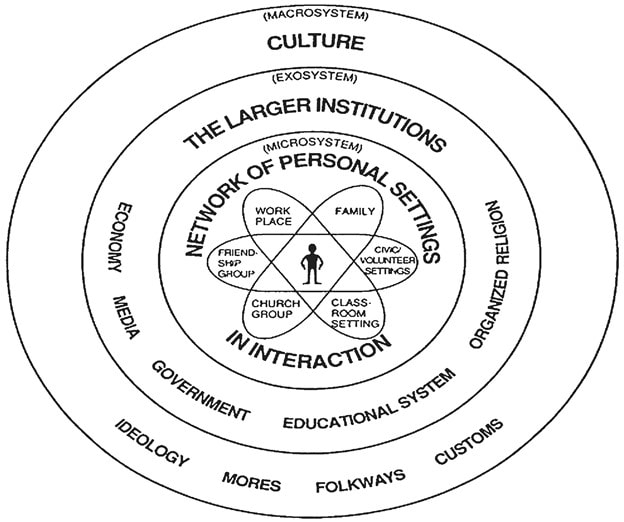 The data provide overwhelming evidence that the Texas Model of inclusive institutions with a relatively low tax-and-spend burden, no individual income tax, and sensible regulation provides an institutional framework supporting more job growth, higher wages, lower income inequality, and less poverty than in comparable states and the U.S., in most cases. Texas is doing something right. Other states and D.C. would be wise to consider adopting Texas’ inclusive economic and political institutions that champion individual liberty, free enterprise, and personal responsibility. 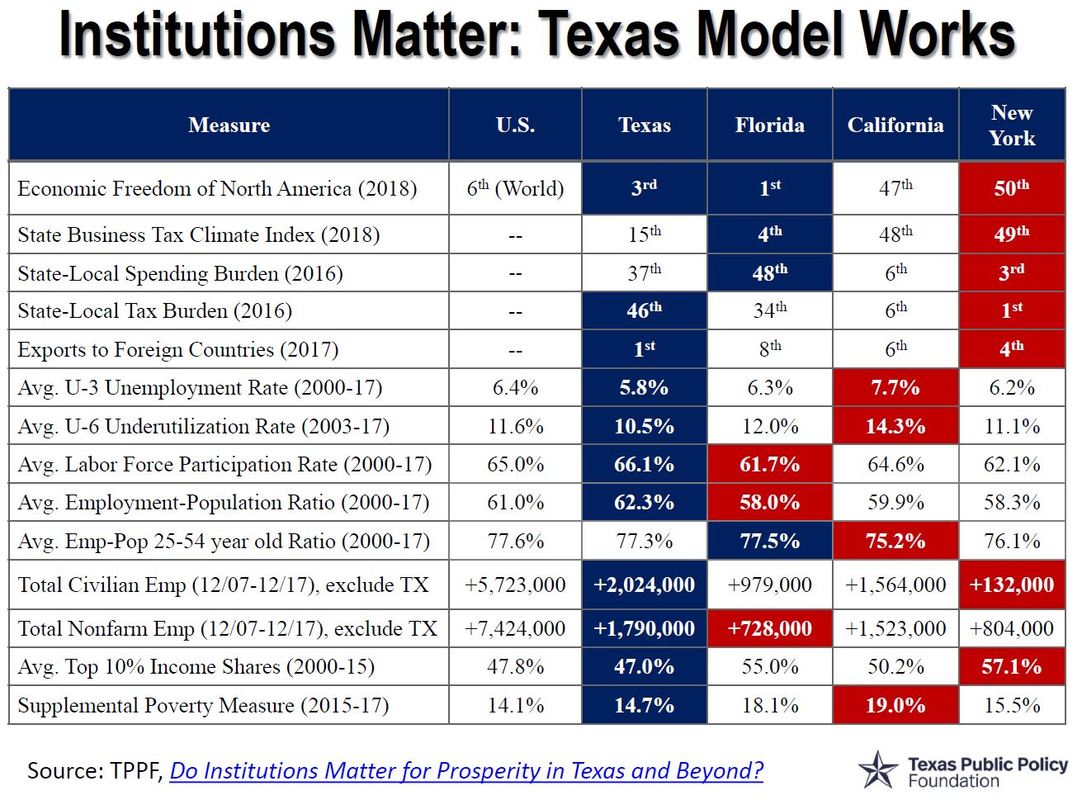 This is a path to providing an economic environment that allows entrepreneurs the greatest opportunity to thrive and for prosperity to be generated for the greatest number of people. Despite this success, improvements are needed to keep the Texas Model competitive and create even more opportunities for all to flourish. These improvements to Texas’ institutional framework include:
• limiting the growth in government spending, • eliminating the state’s onerous business franchise tax, • reducing barriers to international trade, • reducing the escalating burden of property taxes, and • relieving Texans from burdensome occupational licenses. Even with these improvements, the data overwhelmingly show it was not a miracle in Texas, but rather abundant prosperity generated by Texans from a proven institutional framework called the Texas Model. By strengthening institutions to let people prosper, we can also engage in more civil discourse so that we have many opportunities to work together.
0 Comments
Texas Budget Growth Should Match Texans' Ability to Pay - Not Government's Ability to Grow10/31/2018 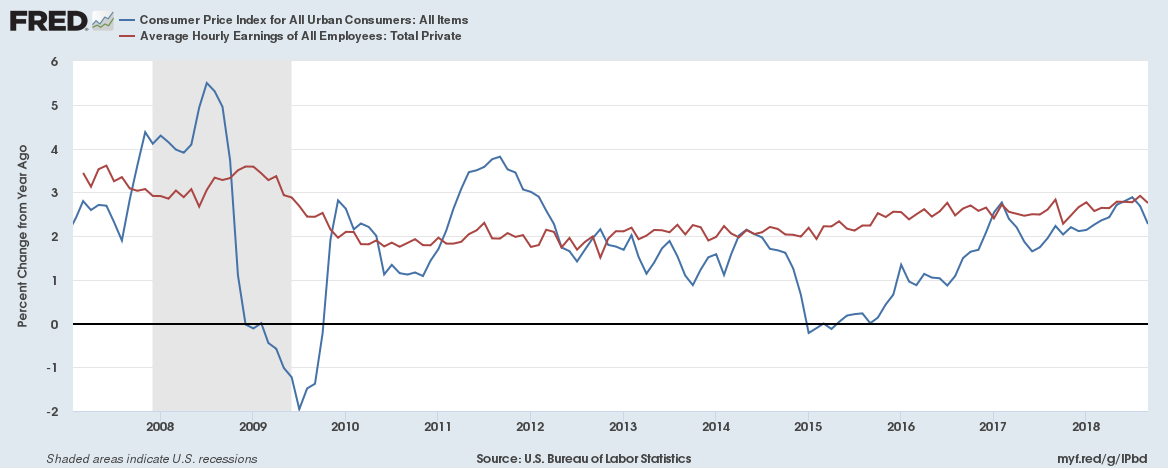 Check out the article by economist Stuart Greenfield below.
It's interesting how his progressive views, and CPPP—but I repeat myself, has started appropriately considering growth of government spending at no more than population growth and inflation. They just happen to want to use a measure of price inflation for state-local expenditures that grows at a more rapid rate than the more typically used consumer price index, which matches their desire to increase spending and ultimately taxes. Of course, the State-Local Implicit Price Deflator supported by Greenfield in the piece below closely measures prices of goods and services purchased by government with little to no voluntary exchange because they are dominated by government intrusion—both the demand and supply. So, those who want spending to rapidly grow can ratchet spending up to increase demand or regulate the supply to get their desired level of spending, which would most often be MORE! Instead, let’s consider the often recommended measure of population growth plus inflation, which is recommended by the Conservative Texas Budget Coalition for a Conservative Texas Budget. State population increases may require more government provisions. Inflation measured by the Consumer Price Index is closely tied to wage growth (see figure below). The addition of these two measures allow for some level of economies of scale. Thus, the metric of pop+inf gives a relatively good indicator of Texans’ ability to pay for their government instead of how much government can inflate their spending by controlling demand and supply. Given it's Halloween, here’s the spooky part: Governments in Texas already spend too much. In fact, the state's budget is up 7.3% more than population growth plus inflation since 2004. This amounts to $15 billion more in taxpayers dollars spent this two-year budget cycle than if the Legislature had increased the budget by no more than pop+inf since 2004. Or, this means that Texas families of four must spend $1,000 more in state taxes, on average, this year alone. They’ll really go nuts when there is the necessary push for a budget that doesn’t increase at all, or…wait for it…shrinks! Because we all know the government currently spends way too much. Meaning we are taxed way too much! The best measure of government is their spending of our hard-earned tax dollars. Guess that’s too spooky for some. #HappyHalloween #LetPeopleProsper ___________________________________________________________________________ Here is the article by Stuart Greenfield at Quorum Report Greenfield: "How much more can be cut from the Texas budget" In response to the TPPF-led “conservative budget,” economist Stuart Greenfield argues that “what these proposals don’t recognize is that growth in population varies over space and that using the CPI understates the increase in prices local governments experience. But what’s a methodological error among conservative friends?” Before beginning my analysis of state spending over this century, I would like to wish both Ursula Parks, director of the LBB and Mike Reissig, Deputy Comptroller the best as they head off into the joys of having a defined benefit plan pension for the rest of their lives. I would also like to thank them for their willingness to assist my less than sterling efforts at providing readers of the QR analysis on various public policy issues. In Shakespeare’s Most Famous Soliloquy, Hamlet states, “to be or not to be that is the question.” This soliloquy must have been modified by the recently organized Conservative Resolution Underfunding Many Basic Services (CRUMBs), whose motto is “to spend or not to spend, what a stupid question.” Alternatively, the group might have named itself, Conservative Actions Killing Education (CAKE), as in Marie Antoinette’s “let them eat cake.” My humor aside, the Conservative Texas Budget Coalition has offered another conservative budget proposal that would reduce the growth in state expenditures and impose restrictions on local government property tax increases. Their proposed “solution” would over time increase the state’s proportion of expenditures for public education and reduce the growth rate in local property taxes. Who could ask for anything more? From FY00-17, state expenditures grew at an average annual rate of 4.9 percent. In FY18, expenditures grew by 3.5 percent. This rate was less than the rate of increase experienced from FY00-17 in the state’s population (1.8 percent) and the increase in the State-Local Implicit Price Deflator (3.0 percent). So yes, the state’s expenditures for FY18 were conservative. Is a conservative budget the way to ensure continued growth in the Texas economy? That is a point of contention between those advocating for additional state expenditures for public education, health services, et al., and the Conservative Texas Budget Coalition, which advocates for a budget that increases by population and inflation so that taxes can be reduced. Like Julius Caesar’s Commentaries on the Gallic Wars, state expenditures can be divided into three parts, Public Assistance Payments (primarily Medicaid), Public Education, and Other Expenditures. Total All Funds (AF) state expenditures over the 18 fiscal years of this century were $1.6 trillion. Figure 1 shows how these expenditures were divided among the three groups. Other Expenditures (Transportation, Public Safety, Higher Education, Salaries) comprise the largest percentage of state expenditures this century, the trend in this expenditure category has been in decline. As shown in Table 1, Other Expenditures accounted for 45.0 percent of All Funds expenditures in FY00. By FY18, this percentage had declined to 36.9 percent. One should also note that along with a decline in the proportion of All Funds expenditures devoted to other expenditures, the proportion of All Funds expenditures for public education also declined. The proportion of state expenditures devoted to Public Assistance Payments increased from 28.3 percent in FY00 to 40.1 percent in FY18. This increase in proportion was an increase of almost 42 percent. Almost half (49.0 percent) of the increase in state expenditures between FY00 and FY18 was accounted for by the increase in Public Assistance. Only 20.2 percent of the increase in All Funds expenditures were for Public Education. Along with reporting the current/nominal dollars of state expenditures, most analyses take into accountthe growth in both the state’s population growth (1.8 percent/year over the century) and the increase in prices. Unfortunately, most of these analyses use a less precise measure (Consumer Price Index) of how state-local expenditure prices have changed. Over 40 percent of the CPI is comprised of consumer spending for housing. Not even Allen ISD spends 40 percent of its budget on housing its football team. Had the reports used the appropriate measure of State-Local Government prices, the Government Consumption Expenditures and Gross Investment: State and local (implicit price deflator, they would find that the prices state-local governments pay for goods and services are higher than the CPI. One can view how the CPI and State-Local Implicit Price Deflator (S-L IPD) have varied over time. In 2017 the S-L IPD was 16.1 percent greater than the CPI in 2017. Figure 2 shows how the population and the differing price indices affect real expenditures. Using the appropriate price deflator has a significant effect determining real expenditures. As shown in Figure 2, between FY00 and FY18 nominal or current dollar AF expenditures increased by 134.5 percent. When adjusted for the state’s increasing population (1.8 percent per year) and the increase in the CPI (2.1 percent per year) since FY00, the CPI-adjusted AF increase was 17.3 percent. Using the more precise S-L IPD (3.0 percent per year) shows a decrease in real AF state expenditures of 0.4 percent since FY00. So the state spent 0.4 percent less in FY18 than it spent in FY00. Talk about being parsimonious! I would hope that in the future greater concern is shown on using the correct measure for inflation that state and local governments face. According to Fiscal Size-Up 2018-19, 28.5 percent of state All Funds Appropriations for 2018-19 are for purchasing medical services, i.e., Medicaid. In the CPI the relative importance of medical care is 8.7 percent, one-third the importance in the state budget. This difference in importance understates how inflation affects real state-local expenditures over time. Using the incorrect price index affects two other areas that are being debated during this election season. These areas include state expenditures for public education and local government property tax increases. Analyzing state public education expenditures finds different groups using different student counts (ADA, WADA, Enrollment) and different price indices (US CPI or Texas CPI). Again, using either of these price indices understates the increase in costs faced by local school districts. Those advocating for reducing the growth rate in local government tax increases would limit this growth to the growth in population and increase in inflation. To exceed their 2.5-4 percent increase in local property taxes would require voter approval. What these proposals don’t recognize is that growth in population varies over space and that using the CPI understates the increase in prices local governments experience. But what’s a methodological error among conservative friends? Future articles will address these two issues and show how using state population growth, and the CPI will have adverse an impact on the areas of the state that have experienced most of the state’s population growth. The other article will show that using the CPI instead of the S-L IPD understates the “true” decline in the state’s financing of public education. Bet y’all can’t wait for these page-turners. Dr. Stuart Greenfield holds a Ph.D. in economics from the University of Texas. He worked for three Comptrollers of Public Accounts, and since retiring from the state in 2000, Greenfield teaches economics at ACC and UMUC. In this Let People Prosper episode, let's discuss Nobel prize-winning economist Paul Krugman's recent concern about the $779 billion budget deficit in FY 2018 under President Trump. Unfortunately, he wasn't worried about the 4 years of more than $1 trillion in deficits under President Obama and he in fact wanted even higher deficit spending. This episode provides a lesson in economics on the aggregate demand-aggregate supply model of how these policies should work in theory but how this mainstream view misses a lot that actually results in my preferred mainstream view of how the economy actually works and the burden higher government spending and resulting deficits put on economic activity and our prosperity. Last Friday the Bureau of Economic Analysis reported that there was an increase of 3.5% in real GDP growth in the third quarter of 2018, indicated that 2018 may be above 3% growth for the first time in more than a decade. This issue along with the rising deficit gave rise to Krugman's tweet below. Here's what Krugman tweeted: "Reaction to the GDP numbers: quarterly growth rates don't mean much. For one thing they fluctuate a lot -- e.g. rapid growth in 2014, signifying little. For another, you can always juice the numbers for a few quarters by running big deficits. What about the long term"? Here was my tweeted response to his tweet that received a lot of attention: "Who is this @paulkrugman who wasn’t worried about budget deficits during #Obama’s 4 years of more than $1 TR deficit but is worried about #Trump’s $779 B? Recall #Krugman was in favor of LARGER deficit spending to “stimulate” the economy under #Obama. Principles matter." I recommend going to my tweeted response and viewing the comments and discussion. It was a rather lively discussion with some good info in there along the way, but much of it was just noise. This recent WSJ opinion piece by Nobel prize-winning economist Edmund Phelps explains the fantasy of fiscal stimulus quite well along with the nice figure below that shows stimulus doesn't correlate with faster economic growth. What we really need for more prosperity is a government that simply sets the rules of the game such that the institutional framework allows for civil society to flourish along with the resulting prosperity for people. Government under presidents of each main party have fallen victim to the "stimulus" argument when in fact it should be about providing the most pro-growth economic environment while running balanced budgets. A good model would be to look at Texas. #LetPeopleProsper 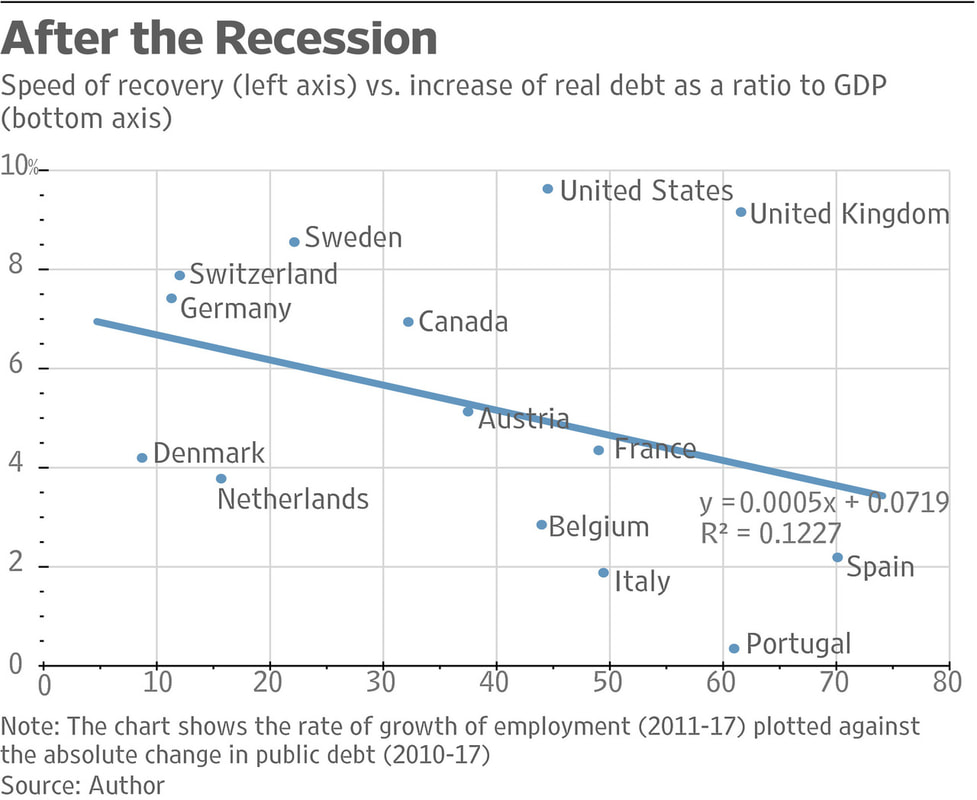 In this Let People Prosper episode, let's discuss the report released by the U.S. Treasury today that notes the federal budget deficit was $779 billion, an increase of 17%, in fiscal year 2018. Again, the evidence shows that government doesn't have a revenue problem but rather a spending problem. The largest increase in expenditures was in interest paid on the debt that increased by 23.6% to $325 billion, which is about half of what our taxpayer dollars are used to fund national defense, about one-third of what we pay for Social Security, and about 8% of total federal expenditures. A problem is that interest on the debt will continue to increase at a rapid pace because the national debt looks to continue to grow and the Federal Reserve is expected to raise their targeted federal funds rate, which is currently 2-2.25%. Each dollar spent by the government is funded by either taxes, debt, or inflation. Each of these drain resources from the productive private sector. In other words, each dollar crowds out our ability to satisfy our desires and prosper. So, we must be able to prove without doubt that each dollar is spent more effectively by politicians than by individuals in the private sector. Sure, there are roles for government, but, in my view, the federal government should have three main functions: national defense, justice system, and very few public goods. The total of national defense is just above $600 billion per year, so assuming the rest may run $400 billion per year, that $1 trillion federal budget would be only 25% of the $4.1 trillion spent today. Given a $1 trillion federal budget, the budget surplus would be $2.3 trillion, allowing for substantially lower taxes at every level--preferably one flat rate on final consumption. You'll also notice that tax collections did increase even after the large Trump tax cuts indicating that the robust growth of a dynamic economy supported more revenue, even if it was less than what it could have been otherwise. Moreover, higher tax revenue negates some of the noise by the Congressional Budget Office of a $1.5 trillion deficit over a decade based on a static economic model, but we don't live in a static world and the data today are another revelation of that fact. When we consider these details, the crowd out effect of government spending and interest on the $21.5 trillion debt, which is greater than our country's entire economic output of $20 trillion, is a huge cost to the prosperity of our nation that we must get control over before it's too late. But the cost is even greater than that because the $20 trillion GDP includes government spending, which is about 20% of GDP. If you exclude government spending, which there is good reason because it's a transfer of funds from the private sector, then the national debt would be $21.5 trillion/$16 trillion, or 134%! That's what we are looking at trying to pay back over time and is currently more than $65,000 per American. As Reinhart and Rogoff wrote in their book This Time Is Different, there's likely a threshold when the debt-to-GDP ratio gets too high such that it hinders economic growth. I don't think that threshold is very high and that we are far above it, and moving further above it quickly unless things change. We are seeing the benefits of the tax and regulatory reforms along with the benefits of a long--though relatively weak before recently--expansion, but these benefits will quickly expire if government spending is not restrained, trade barriers continue to be imposed, and the national debt continues to rise. The best path to let people prosper is by getting rid of government barriers to opportunity, so we must reduce government spending. 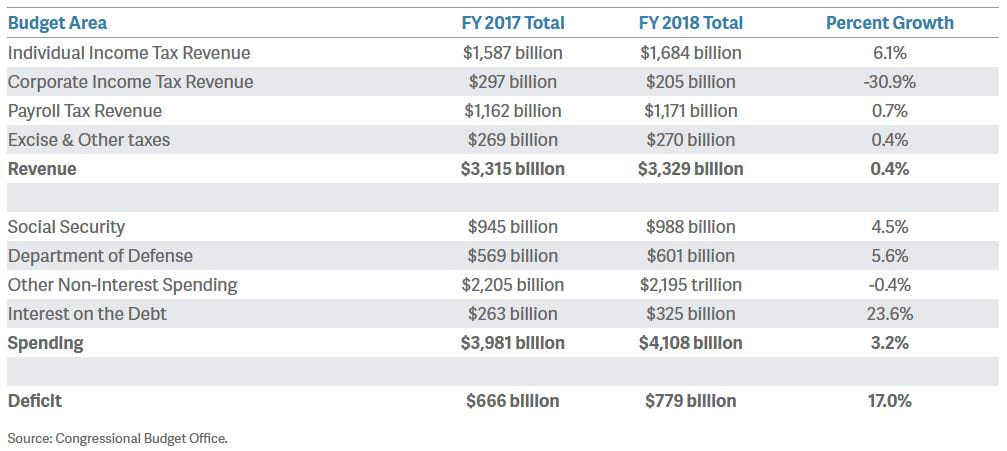 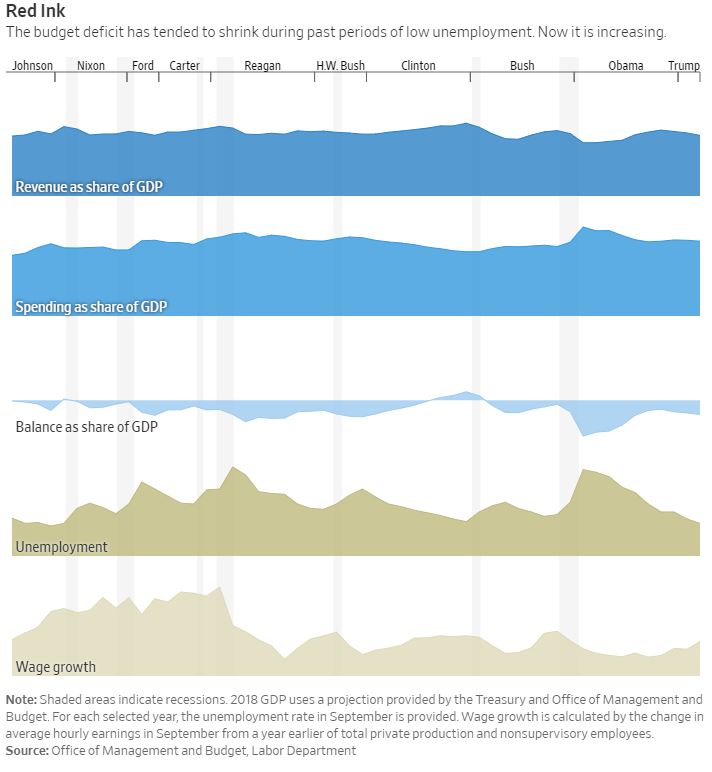  President Trump’s Council of Economic Advisors recently released a reportshowing that there is a large portion of non-disabled, working-age adults (16 to 64 years old) who are receiving government non-cash welfare payments funded by taxpayers but aren’t working. For example, of those on Medicaid, 53 percent of non-disabled, working-age adults don’t have a job.
These perverse incentives created by relaxed work requirements for able-bodied workers who receive welfare payments not only hurts their financial prospects today and over time, but is an extractive institution hurting civil society. Institutions are the framework that makes up society. They are the rules of the game. Institutions can include formal laws and rules, but also more informal social norms, families, and churches. Institutions can be considered inclusive, like capitalism, or extractive, like socialism, as noted by Acemoglu and Robinson. Economist Douglass North remarked in his 1993 Nobel Prize in Economics lecture that “if the institutional framework rewards productive activities then organizations—firms—will come into existence to engage in productive activities.” On the opposite side, if institutions reward unproductive behavior, the result will be more unproductive behavior and increased poverty. Unfortunately, the institutional framework in the U.S. has many extractive programs in our welfare system that have incentivized unproductive behavior and made many people poor in the process. As another example of a costly welfare program, the Supplemental Nutrition Assistance Program (SNAP) provides assistance to more than 10 million non-working, non-disabled working-age adults. Of all the childless adult recipients on SNAP, 63 percent do not work, which is higher than the rate of recipients with infants (57 percent)—often the most difficult age to raise a child. Clearly, the incentives to work while getting welfare are little to none, even when you are able to work and don’t have a child. Welfare should be based on need, and with the unemployment rate at record lows and more job openings than people unemployed, there are few excuses to not work. Work ethic, personal responsibility, and independence are all informal institutions. They are the rules of our game. These institutions are inclusive, because they allow individuals to be self-sufficient, and become productive members of civil society. When these incentives and social norms are eroded, our institutions become extractive, redistributing resources from productive workers to welfare recipients. This process is done by government bureaucrats subjectively determining who gets what and when. Moreover, these institutions create a situation that crowds out inclusive social institutions, such as families and private charities and churches, which have been the backbone of civil society for centuries. Our current welfare system, specifically the Temporary Assistance for Needy Families (TANF), has been reformed before, making it more inclusive. This includes putting the recipients on a path to individual responsibility and prosperity by increasing work requirements to receive welfare, thereby increasing recipients’ productivity that helps them actually get off government welfare. Chicago economist Casey Mulligan has explained that the income cliff when someone earns more income and is dropped from government welfare programs acts like an implicit marginal income tax that reduces their incentive to work. It’s time to stop this sort of welfare for non-disabled working age adults. This would not only improve the relatively low but improving employment-to-population ratio for the prime age working group(25 to 54 years old) but also help to reduce welfare and the taxes paid by workers to fund these programs. The Trump administration’s recent report highlighting these issues and calling for an increase in work requirements of welfare programs for able-bodied people is a step in the right direction to let people prosper. www.texaspolicy.com/blog/detail/government-welfare-keeps-people-from-flourishing I discuss the markets that tell us something about domestic and global economies and how spending must be restrained at the federal and state levels, like cutting corporate welfare, for increased prosperity. Thanks for watching! Testimony Before Texas House Appropriations Committee on Spending Limit Reform (HB 208 & HJR 1)7/27/2017 I appreciated the opportunity to testify before the Texas House Appropriations Committee regarding strengthening the state's current weak spending limit by passing a conservative spending limit. House Bill 208 gets Texas much closer to the ideal limit, which I outlined in my testimony. While there are some beneficial aspects of the House Joint Resolution 1, I provided some recommended changes to improve the resolution. You can watch my testimony here at time 1:36:00: http://tlchouse.granicus.com/MediaPlayer.php?view_id=40&clip_id=14360. Check out the press release here: https://www.texaspolicy.com/press_release/detail/tppfs-vance-ginn-to-testify-on-passing-a-conservative-spending-limit. Here's my written testimony: 
I appreciated the opportunity to testify before the Texas Senate Finance Committee regarding strengthening the state's current weak spending limit by passing a conservative spending limit. Senate Bill 9 gets Texas much closer to the ideal limit, which I outlined in my testimony. You can watch my testimony here (I'm the first person to testify in the hearing--look for video of Senate Finance Committee on 7/22/17): http://www.senate.texas.gov/av-archive.php. Check out the press release here: http://mailchi.mp/texaspolicy/tppf-experts-testifying-at-capitol-this-weekend. Here's my written testimony:
Vance Ginn, Ph.D, testimony before the Senate Finance Committee for SB 9 on Strengthening Texas’ Appropriations Limit. The following are excerpts from the testimony:
"Texas has done better economically and fiscally than most states during much of the last two decades. However, the state’s weak appropriations limit is a problem that needs improvement to consistently control excessive government appropriations. Since government spending must ultimately be paid for by taxation, limiting excessive spending increases is essential for a competitive economy that supports prosperity. The 84th Texas Legislature appropriated a 2016-17 budget that increased by 4.3 percent above the previous period’s appropriations. Although this budget increased by less than population growth and inflation, it should be the first of many given past excessive budget trends. Specifically, the total budget is up an estimated 11.8 percent above the pace of compounded population growth plus inflation since the 2004-05 budget. "Population growth and inflation are two economic measures that account for most of the cost of funding public provisions to a changing population. Research finds that simply changing the appropriations limit to population growth and inflation will lead to tax relief and accelerated economic growth. The key is that a limit with the combination of these measures holds budget growth to no more than the means of taxpayers as more people pay taxes and wages are often tied to price inflation. Our recommendation is to add these measures to account for economies of scale whereby the average cost of providing many government provisions declines over time. Moreover, the appropriations limit growth rate’s current measure of personal income can be represented as population growth plus inflation plus productivity. However, a more productive private sector signals that the marginal return per dollar would be greater in the private sector, meaning that more dollars should remain there instead of being taxed to pay for higher government spending. If government productivity is considered in this calculation, it would be practically impossible to measure and would likely be zero over time, thereby leaving population growth plus inflation. "The current appropriations limit has contributed to excessive government spending. Texas needs to adopt a more responsible appropriations limit to better control the budget so it can be a model for other states to follow. Although SB 9 could use some changes to strengthen it, we believe that it will help limit the size and scope of government in Texas, allowing Texans many more opportunities to improve their well-being. Thank you for your time and I look forward to answering your questions." AUSTIN – Texas Public Policy Foundation’s Center for Fiscal Policy Director Talmadge Heflin will testify before the Texas Senate Finance Committee TODAY, Tuesday, May 17, at 10:00 a.m. CDT in room E1.036 of the Texas State Capitol. Mr. Heflin will give invited testimony on an interim charge to recommend reforms for strengthening the state’s spending limit and consider options for providing tax relief with available revenue above the limit. “Limiting the size and scope of government is best achieved by passing a conservative budget. We believe this is a budget that doesn’t increase by more than population growth plus inflation based on actual past data,” said Heflin. “Any funds available above this limit should be placed in a fund to restrain growth in the budget by returning those dollars to taxpayers. These steps would limit government and allow Texans the best opportunity to improve their well-being.” WHO: The Honorable Talmadge Heflin, Director, Center for Fiscal Policy, TPPF WHAT: Testimony before the Texas Senate Finance Committee WHEN: TODAY, Tuesday, May 17, 2016 10:00 a.m. CDT WHERE: Texas State Capitol Room E1.036 More information about the hearing can be found at: http://txpo.li/1XwQxhY Mr. Heflin’s full testimony can be found at: http://txpo.li/1XwQTVL To schedule an interview with Mr. Heflin, please contact Caroline Espinosa at cespinosa@texaspolicy.com or 512-472-2700. The Honorable Talmadge Heflin is Director of the Center for Fiscal Policy at the Texas Public Policy Foundation, a non-profit, free-market research institute based in Austin. In the 78th Session, Heflin served as chairman of the House Committee on Appropriations and navigated a $10 billion state budget shortfall through targeted spending cuts that allowed Texans to avoid a tax increase. The Texas Public Policy Foundation is a non-profit, free-market research institute based in Austin, Texas. Find us on Facebook Follow us on Twitter http://www.texaspolicy.com/press_release/detail/todaytppfs-talmadge-heflin-to-testify-beforetexas-senate-finance-committee This commentary, written by Dr. Vance Ginn and Kiara Pillay, originally appeared in the Austin American-Statesman on May 2, 2016.
Texas’ 2017 legislative session is quickly approaching. The bedrock of the Texas miracle has been a diversified economy and a good tax climate. Lower oil prices and slower economic growth and job creation threaten the state’s prosperity. With less revenue likely available next session, it’s essential to keep this solid economic foundation by scrutinizing every taxpayer dollar spent, so excesses and higher taxes are not on the table. The Texas Public Policy Foundation does this with its Spotlight series that highlights trends in all 10 articles of the 2016-17 state budget. The findings are alarming when comparing budget increases with compounded population growth plus inflation. This key measure is included in the recommended spending-limit reform that covers the budget and uses actual past data. Thirteen member organizations of the Conservative Texas Budget Coalition support using this key measure as the budget’s maximum growth rate. Since the 2004-05 budget, the overall budget has increased 69 percent, compared with an estimated 55 percent increase in the key measure. If our reforms were followed since the 2004-05 budget, taxpayers would be supporting a budget that’s $17 billion less than the 2016-17 budget of $209.1 billion. This means Texans are paying higher taxes today than if the budget had increased at only the rate of essential demands of government. Therefore, it’s important for legislators and taxpayers to probe every budget area for excesses. Fortunately, the Legislature passed a budget last session that increased 2.9 percent, which was less than our target based on this key measure of 6.5 percent. However, several functions have increased by more than this measure — and multiple articles increased by more than it has increased since the 2004-05 budget:
Bottom line: Each article must be watched closely to ensure that the 2018-19 budget doesn’t exceed population growth plus inflation. This will assure Texans that lawmakers are being good stewards of their tax dollars and are keeping a solid economic foundation for them to prosper. http://www.texaspolicy.com/blog/detail/scrutinize-every-dollar-in-texas-state-budget |
Vance Ginn, Ph.D.
|
||||||

 RSS Feed
Proudly powered by Weebly