
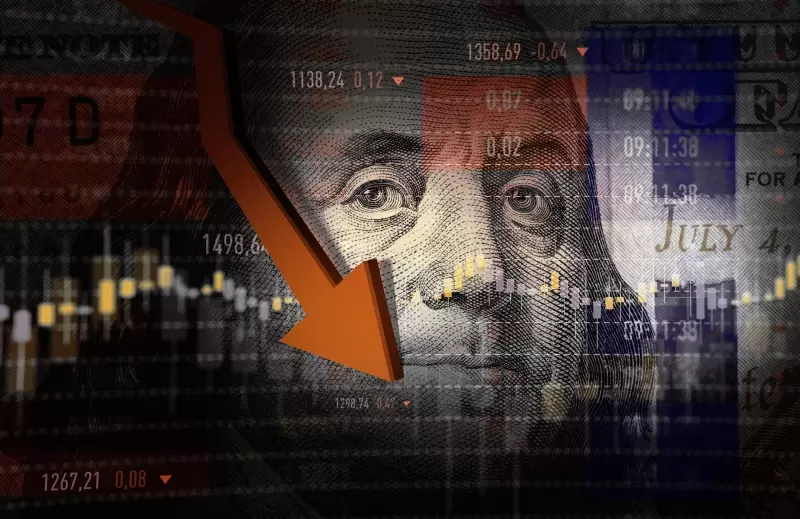
 Our country’s economic journey throughout 2022 is one for the books. We had the highest inflation in 40 years , the highest mortgage rates in 20 years , and the worst stock market declines in 14 years . People are still struggling to pay bills, reduce debt, and save money, with average weekly earnings adjusted for inflation down 3% year over year .
The dismal state of the economy blindsided many people last year, but we don’t have to be caught so unaware in 2023. Knowledge is power, and knowing what could happen this year might make a difference in your finances. I believe that the burden of the inflationary recession will intensify this year. Expect to see the economy continue to correct from the consequences of Congress’s excessive deficit-spending that simply moved our money around, Biden’s overregulation that stifled energy production and other markets, and the Federal Reserve’s monetary mischief that manipulated markets through its bloated balance sheet. Currently, the Fed’s balance sheet remains well over $8.5 trillion , not falling nearly fast enough after it peaked at $8.9 trillion in April 2022. Much of this stems from when the Fed’s balance sheet more than doubled due to pandemic-related shutdowns to help Congress afford massive spending that ballooned the national debt by more than $7 trillion over the last three years. Now, the debt sits at about $31.5 trillion . Adding to the perfect storm is a regulation-happy president, Joe Biden, who hinders the ability of the free market to flourish, particularly in the areas of oil and gas, with his flawed green-energy agenda. The vital ingredients for a suffering economy with continually high inflation and high interest rates are present. The popular misery index (a measurement of economic distress on the everyday person), which uses the unemployment rate plus inflation, was above 10% in December — the highest rate since before the shutdowns in 2012. Given the projection of the economy in 2023, we can expect rising unemployment and elevated inflation as employers cut costs or raise prices to stay afloat. We’ve already seen employment take hits in the household survey, which has shown net employment declined in four of the last nine months for a total increase of just 916,000 jobs added since March 2022. In short, we’re looking at a continued inflationary recession with higher interest rates in 2023. It won’t be pretty, but there’s a reason for hope: a divided Congress. Republicans now have control of the House, and Democrats have control of the Senate and the White House. That division can create roadblocks to poor policies being pushed out of the Biden administration and the Democrat-controlled Senate, which has destroyed economic opportunities over the last two years. But the other possibility is more costly executive orders from Biden as he seeks to push more green energy policies, such as the ESG investing scam or stopping permits for oil and gas, and other flawed initiatives. This would mean more blockades to free-market flourishing. If the economy is prohibited from growing due to excessive regulation, taxation, and spending, we can anticipate that things will get worse before they get better. We’re in this mess because of 2020’s “shutdown recession” and subsequent government failures. The way out is the proven recipe of pro-growth, liberty-enhancing policies of less spending, taxation, and regulation while the Fed aggressively cuts its balance sheet. This would unleash the economic potential of the productive private sector and get people working well-paid jobs while substantially reducing inflation. In the meantime, hardworking people should minimize expenses, save for the storms ahead, and stay connected to family and the community for the smoothest possible sailing throughout what is sure to be a bumpy ride in 2023. Originally published at Washington Examiner.
0 Comments
As Congress rolled out the $1.7 trillion omnibus government-funding bill, an economist broke down the effects of large federal spending amid big deficits and high debt, the impact on tuition, and the need for oversight of some of this taxpayer money. NTD spoke to Vance Ginn, the president of Ginn Economic Consulting, who warned against massive spending, given a federal deficit of over $1.3 trillion and a national debt of over $31 trillion. Ginn called on Americans to say “no” to the bill and let the next Congress draft a budget, and alleged that the omnibus bill expands social safety nets without connecting them back to people joining the workforce.
Originally posted at NTD News. 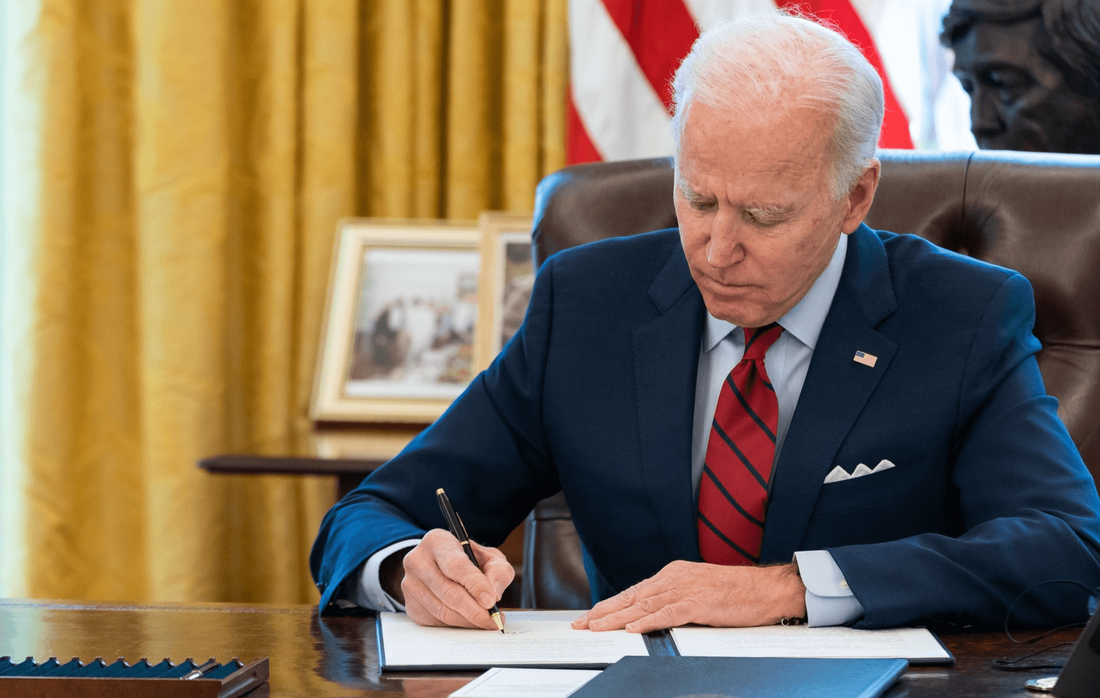 In a desperate attempt to garner public favor before the midterms, President Biden set his sights on a new target to distract Americans from the pressing inflation problem: overdraft fees. Those low-percentage charges issued by banks to customers who use more money than they have in their accounts are apparently dire.
Biden tweeted: “My Administration is making clear that charging Americans for a bounced check they deposit or an overdrafted bank account isn’t just wrong. It’s illegal.” In the official White House statement, he refers to these charges as “hidden fees,” discounting that bank account holders voluntarily sign off on the possibility of overdraft fees when they open an account. Unlike Biden, most people understand that what’s illegal is using someone else’s funds without permission, not issuing a penalty for doing so. Eliminating overdraft fees would disempower personal responsibility through government overreach and reduce the opportunity for some to open an account. Charges are a practical price for using an institution’s capital to support money mismanagement, and an underreaction, one could argue, to theft. As it turns out, nothing is free, including using the bank’s money when you’ve overspent yours. This is bad enough, as people have begun to think that scarce things are free, but Biden says he isn’t stopping at overdraft fees. He’s also going after what he’s branded as “surprise” fees, such as family seating fees issued by airlines, switch fees from internet and cable services, and service fees from concert and sporting venues. Notably, he claims that these charges are more menacing than typical add-on fees and that “firms should be free to charge more to add mushrooms to your pizza.” So, what’s more menacing about concert venues charging a service fee to cover operational costs than Pizza Hut charging for extra toppings so they can still turn a profit? There isn’t a difference. What’s malicious is that Biden wants to penalize businesses for trying to stay profitable in a recession that he’s prolongingby addressing “problems” like these instead of the 40-year high inflation that’s removing purchasing power from consumers and hurting families. Biden insists that these “junk fees” are undetectable by consumers and therefore unfair, and that this makes it impossible for people to compare the real costs between service providers. Those seeking to promote more government involvement in businesses,almost always undermine individual agency. The reality is that consumers can fight against fees, take their business elsewhere, or choose to pay them if they think it’s worth it. That’s what prices in a free-enterprise system of capitalism are all about: allowing people to improve their lives. There are always trade-offs in life, and if the Biden administration successfully removes all these fees, we can expect to see another kind of trade-off instituted in its place. Nothing scarce is free. Every decision we make gives up something else, which economists call opportunity costs. Politicians too often think they can ignore this fact, but they do so at the peril of the people whom they serve. This kind of overreach isn’t just insulting to Americans, it’s harmful to a free-market system that operates best with limited government. By convincing people that they’re powerless to manage their money or find the best service provider because they’re helpless against “big scary businesses,” the government creates enough public concern to justify stepping in where they have no business doing so. The economy is suffering enough under Biden’s overregulation, Congress’ overspending, and the Fed’s overprinting; the last thing it needs is another barrier to growth and organic competition. Biden can quit trying to kid the American public that overdraft fees, which make up less than one percent of annual household spending, are the culprit for this lackluster economy. Instead, he should scrap his failed policies and promote free-market solutions that let people prosper. Originally published at AIER  It’s official—we’re in a recession. And have been all year.
The government reported today that there were two consecutive quarters of declining inflation-adjusted economic output to start 2022, a condition that has been called a recession every time since 1950. And inflation is running at a 40-year high. Americans are struggling in the Biden economy. Consumer expectations about the economy have dropped to the lowest in nearly a decade. Small business sentiment is at a 48-year low. Even as the Biden administration is stuck on how to define a “recession,” Americans feel this depressed economy. This stagflation on steroids hasn’t been seen in a generation and it is the direct result of the economic policy disaster coming out of D.C. Forty years ago, the economy dealt with a similar situation after bad policies from the Carter administration and the Federal Reserve. It took severe monetary tightening by Fed Chair Paul Volcker and a double-dip recession to correct the prior government failures. Fortunately, the Reagan administration balanced some of Volcker’s (correct) quantitative tightening with a pro-growth policy approach of some spending restraint, large tax cuts, sensible deregulation, and more free trade agreements. These policies removed barriers imposed by government and supported incentives to work and invest so that the economy expanded, such that the next 20 years are called the Great Moderation. Fast-forward to today and we’re in a similar economic situation with a recession and high inflation but without the same bravado of sound policy at the Fed or in the White House. Instead, Federal Reserve Chair Jerome Powell has been tightening monetary policy at a faster rate than in recent years—but at a much slower rate than Volcker did then, meaning high inflation will likely persist. And President Joe Biden is clearly no President Reagan. In fact, just this week President Biden has been pushing a $280 billion spending bill known as the “CHIPS Act,” which is essentially taxpayer handouts to semiconductor businesses and the tech industry that may help China in the process at the expense of all other businesses and Americans. The Senate passed the CHIPS Act and the House likely will, too, as some see it as “free” money to win votes. Instead of increasing corporate welfare, raising the national debt, and likely driving inflation higher, the answer should be to reduce the cost of doing business by cutting taxes, spending, and regulation, which is a proven recipe for prosperity. We’ve seen the opposite. When you overinflate an economy through overspending by Congress, overprinting by Fed, and overregulating by Biden, these are the depressed and depressing results. And Biden and Congress are doubling down on bad policy. There may be an agreement in the Senate on a scaled-down version of “Build Back Better” in a reconciliation bill, which is being scored over a decade at $430 billion in new spending but potentially a reduction in the debt by $300 billion from an estimated $730 billion tax hike. But the devil will likely be in the details of how much more permanent spending is hidden, as in previous versions, and how much of this temporary tax hike won’t materialize in more revenues as it makes the recession more severe. Tax hikes don’t work to reduce the deficit because they slow economic growth, which reduces tax revenues. And this is the worst time to be raising taxes, much less paying for $370 billion more for the Green New Deal, forcing us toward unreliable energy sources at a very high cost. So this will likely raise the deficit, give the Fed more ammunition, and raise inflation further at the expense of growth. We can’t afford these progressive policies. But we can correct past government failures faster and have another long period of economic prosperity like after Volker and Reagan. The Fed should move back to a rules-based monetary policy and tighten more quickly now. Congress should pass a fiscal rule that restrains or cuts spending and make the Trump tax cuts permanent while finding more tax relief. And Biden should roll back his onerous regulation and sign free trade agreements. And if they don’t, the states and the people have to step up to the plate to get us out of this depressed economy. Published at TPPF |
Vance Ginn, Ph.D.
|

 RSS Feed
Proudly powered by Weebly